

Sam Fender has donated the entirety of his twenty-five thousand pound Mercury Prize prize money to the Music Venues Trust, which operates to protect the UK's independent music venues.
He was presented with the cheque on mid-October as his third album People Watching was declared the top album of the previous year.
The musician has decided to hand the money over to the trust, in appreciation of the essential function grassroots venues fulfilled in his initial steps.
"I wouldn't be doing what I am doing today if it weren't for all the gigs I did around the region, and further afield, when I was beginning," said Fender. "These locations are iconic, but they are in difficulty."
Since the start of 2023, at least 150 of these spaces have permanently closed – approximately 16% of the whole industry in the UK.
Recently, top acts including the band Pulp, the group Coldplay, Katy Perry and Ed Sheeran have all supported the trust in its initiatives to support the industry, by adding a minor surcharge to their admission fees, which supports independent venues.
He also joined in, generating more than £100,000 on his 2024 arena tour to help thirty-eight grassroots venues across England, Scotland, and Wales.
The donation supported venues that were dealing with potential shutdown due to challenges caused by flooding, fire incidents and bereavements, as well as licensing issues, conflicts and sound issues.
Other venues were granted financial assistance in improving infrastructure and gear that helped artists and fans.
"The concept that money from shows in big venues supports the independent spots, where it all starts for performers like me, is just logical," Fender has said.
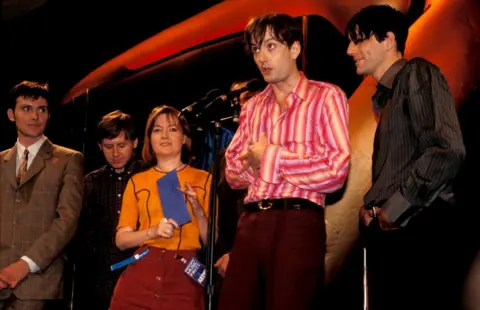
He is not the first artist to give his Mercury Prize funds to worthy causes.
In Pulp earned the award in 1996 for their record Different Class, vocalist Jarvis Cocker declared that the act would contribute their winnings to the charity War Child.
During 2002, artist Ms Dynamite split her bounty across several charities, including the NSPCC and a charity for Sickle Cell.
"Additionally, I gave a thousand pounds to the center, to their classes, because I practiced gymnastics when I was a child and they needed new equipment," the artist told a publication.
Previously, the band donated their funds to the community center that developed their band, alongside other grassroots music organisations.
Additionally winners that year they donated their winnings to a multiple sclerosis charity after a friend was identified with the disease.
"The victory was sufficient," stated artist Small. "The cash was the cherry on top but we didn't need the cherry, because we had the main prize. So our winning touched another person's life."
In the past week, the trust revealed it had protected two local spots in that region, by bringing them into community ownership.
The Joiners in Southampton and the second in Bristol were acquired under the community ownership scheme, which is funded by the arts council and enthusiasts who acquire "shares" in the properties.

